
 Shawn Hall
 The Classic Movie Blog Association recently interviewed me for its Reel Conversations series about how I fell in love with silent film, why the era continues to fascinate me, and some of my favorite silent film hidden gems for viewers who want to explore beyond the usual classics.
We talked about everything from Buster Keaton and Cecil B. DeMille to lost films, live screenings, overlooked filmmakers, and why silent cinema still has so much to offer modern audiences.
Here’s our full conversation.
HOW I FELL FOR SILENT FILM
What was your gateway silent film?
I was a history buff growing up, so I was always fascinated with old black-and-white footage I saw in documentaries. Just the fact that we actually had preserved an actual tangible record of life back to the 1890s felt like a unique portal that made history and the people long gone feel so real.
Then I stumbled across a TCM showing of Chaplin’s The Kid (1921) when channel-surfing in high school and was shocked that an almost century-old film wasn’t just merely still around, but that it was so hilarious and tear-jerking.
I knew I had to seek out more silent films, and it’s a rabbit hole I’ve been fully down ever since.


Left: The Kid (1921) Right: One Week (1920) Ad
If someone has never seen a silent film before and wants to understand why the era still matters, is there a single film you would recommend they watch first, and why that one?
The silent era matters because there are so many entertaining, moving, and thought-provoking films that have stood the test of time.
People often talk about the silent era being important because of all the innovations it made, setting the foundation for the rest of cinema history. While we silent film fans absolutely love this aspect of silent cinema, I don’t think it’s that effective of a pitch to newcomers, making watching a silent film a chore or a homework assignment.
The fastest way to help someone understand why the silent era matters is to experience the era’s lasting entertainment value.
That’s why I’d show them Buster Keaton’s One Week. The film is incredibly straightforward to understand, yet expertly crafted with a strong emphasis on physical comedy.
One Week literally could not be made today; we have no performers who perfected the use of their body in vaudeville for their whole life as Buster and so many others did!
I’d hope that by showing a newcomer to silent film Keaton’s physical comedy, the perception of silent films being a chore would quickly give way to a curiosity to seek out similar films that lean into the possibilities of a purely visual medium that we simply can’t easily replicate in today’s cinema.
5 SILENT FILM HIDDEN GEMS
Looking beyond the usual classics? These five silent film hidden gems are films I’d recommend to a relative silent-film newcomer—or someone who has already seen the basics and wants to dig deeper.
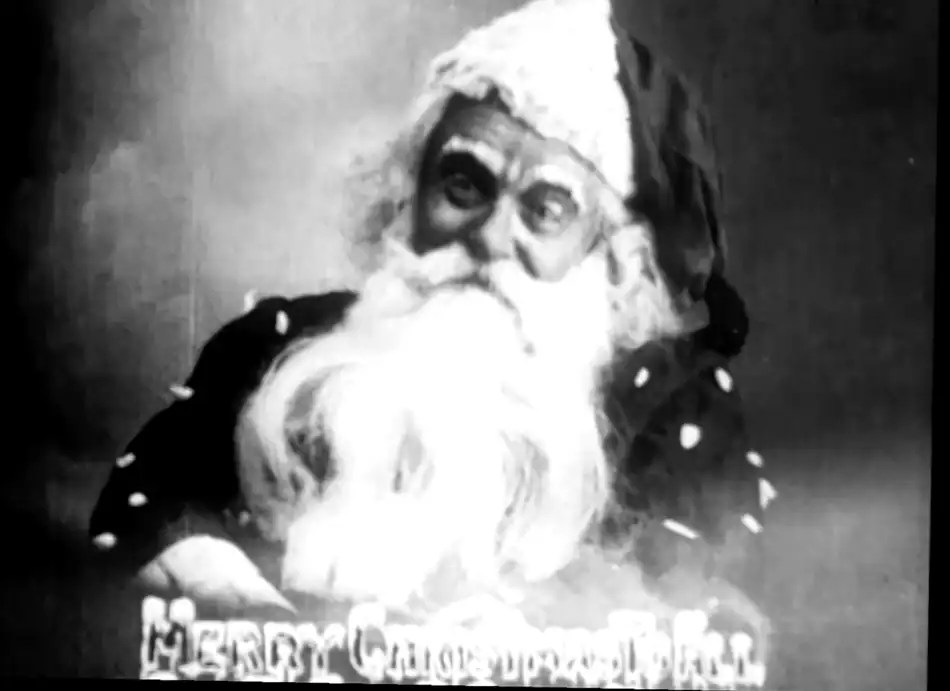
The Night Before Christmas (1905)
Sometimes we focus so much on early cinema’s innovations that we miss its simple pleasures. Edwin S. Porter’s charming one-reel retelling of the famous poem, including miniatures of Santa’s reindeer, captures the Nickelodeon era at its most endearing and has become an annual Christmas Eve watch for me.
Read my Top 5 films of 1905
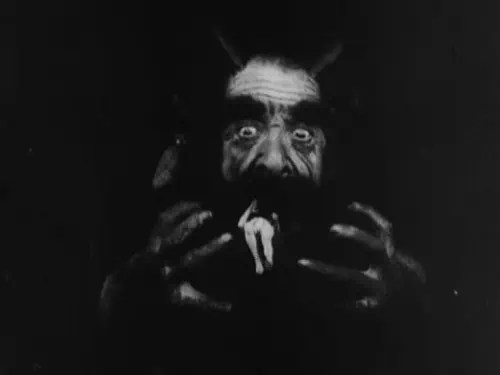
The Inferno (1911)
I’m pretty desensitized to horror and gore, but The Inferno genuinely terrifies me. Its enormous sets and imaginative special effects create striking visions of Hell, from the flying hordes of the damned to Judas’ kicking legs dangling from the devil’s chomping mouth, that anticipate decades of horror cinema.
Read my Full Review of this horror classic

Hypocrites (1915)
Think silent films are mostly bumbling cops chasing each other around? Lois Weber’s dreamlike exploration of religious hypocrisy, filled with beautiful double exposures, tackles everything from religion and politics to sex and shows just how daring silent cinema could be.
Read my Full Review of this early feature film
Girl Shy (1924)
The Freshman and Safety Last! get all the attention, but Girl Shy is my favorite Harold Lloyd comedy. It plays surprisingly like a modern romantic comedy, only with Lloyd’s trademark slapstick and one of silent cinema’s greatest chase sequences to make it one of the great classic films of silent Hollywood.
Check out my complete rankings of Harold Lloyd’s feature films


Paths to Paradise (1925)
Chaplin, Keaton, and Lloyd are only the tip of the iceberg when it comes to silent comedy. Raymond Griffith’s best film, packed with inventive gags and non-stop action, now beautifully restored and released by CMBA member Ben Model’s Undercrank Productions, shows just how much great comedy exists beyond the famous Big Three Silent Clowns.
Read my profile on Raymond Griffith’s Comedy
What’s one misconception about silent cinema you’d like to correct?
It drives me crazy when silent cinema is treated like a genre, much like how animation is often seen as just children’s movies.
Silent cinema is a medium and, just like modern cinema, covers almost every kind of movie: comedy, horror, western, melodrama, documentaries, animation, experimental films, and even early attempts at musical sing-alongs with the bouncing ball!
Plus it covers four decades of cinema around the world and not just 1920s Hollywood films.
If one kind of silent film doesn’t work for you, try another. If you prefer dramatic films over comedy, maybe start watching Murnau’s Sunrise instead of Chaplin’s The Gold Rush.
There is something in the vast annals of silent cinema that is bound to capture your interest. It just might take a few tries before finding that specific area of interest.


Left: Sunrise A Song of Two Human (1927) Right: The Gold Rush (1925)
Was there an area of silent film that you struggled to connect with, and how did you overcome that—or have you?
Definitely melodrama.
It’s the genre with the steepest learning curve for newcomers simply because the style of acting—especially in the 1910s and earlier—is much more in your face than modern tastes typically allow.
As a viewer I really value the believability of the characters. I can suspend my disbelief for far-out sci-fi theories and mystical worldbuilding, but nothing takes me out of a film more than when the characters act in a certain way just because the script or the director told them to.
When I see the seams of a performance, I’m instantly reminded I’m watching a bunch of footage stitched together shot on a soundstage and lose out on total immersion in the cinematic world.
I had to shift my expectations for what good acting meant. Once I let go of demanding realistic performances, I was more able to enthrall myself in these performances.
I see people act normally every day; why not sit back and enjoy someone playing to the back row of the theater every once in a while?
I’ve found melodrama is still not my favorite genre, but even when I’m faced with an overwrought story of a mother sacrificing everything for her child like many of Norma Talmadge’s films of the 1920s, I can still appreciate that style of acting knowing it takes a certain skill and training to achieve it.
I still prefer the understated silent performances, like Maria Falconetti in The Passion of Joan of Arc or Conrad Veidt in The Man Who Laughs, but I’m a lot more open to different styles than I was before.

A deathbed confession on a notepad in 1914’s The Squaw Man and the same notepad used in the film at the Harold B. Lee Library circa 2024.
Have you had an amazing live cinema/screening experience that you’d like to talk about?
The most impactful live screening was my first silent film with live accompaniment.
I saw a screening of DeMille’s first film The Squaw Man (1914) at the Harold B. Lee Library Special Collections as a college freshman.
What blew my mind is they had a prop—a little red notebook with a message scribbled on it—used in that very same film preserved in their archive that I got to touch and hold!
This all came full circle when I volunteered at the very same barn DeMille shot The Squaw Man at—now the Hollywood Heritage Museum right by the Hollywood Bowl in LA.
The movie is a cliched Western yarn with uninspired direction, but everything about that screening was so magical and pivotal to not just my love of silent film but my visits to archives and deep dives on the era and its films.
And of course attending the Pordenone Silent Film Festival in person was a lifelong bucket-list item I crossed off a couple years ago.
It was amazing to see all the work archives around the world are doing and to see films that an audience often hasn’t seen together in over a century. It’s just a one-of-a-kind experience.


DeMille’s visually striking lighting in The Cheat (1915)
Who do you feel is criminally under-discussed by modern cinephiles, and where should someone start with that person?
He’s actually a name most people know, but Cecil B. DeMille’s amazing silent career is overshadowed by his later work.
While I’m still a sucker for his tin ear for dialogue—“Moses, MOSES!”—he was one of the most important pioneering directors in early Hollywood, held in the same high esteem as D.W. Griffith and Lois Weber in the mid-1910s.
I highly recommend everyone see his 1915 The Cheat.
At a time when most films sought to cast an even lighting over the actors and stage without a single shadow in sight, DeMille and cinematographer Alvin Wyckoff went in the opposite direction.
Borrowing heavily from theatrical lighting practices made popular by the DeMille family’s friend David Belasco, the pair experimented with several lighting setups and featured heavy shadows at pivotal points throughout The Cheat.
When Sessue Hayakawa’s character is shot, we only see it from another room through a Japanese sliding paper door. His silhouette slowly sliding down the door is one of the most jarring, effective shots in all of cinema and was an inspired break from previous filmmaking thought.
From there I’d check out his string of early films, like The Captive and A Golden Chance (both 1915), that are deliciously entertaining hour-long pictures.
His bedroom parlor comedies with Gloria Swanson, like Why Change Your Wife? and Don’t Change Your Husband, are so transgressive and surprisingly different from DeMille’s later epics.
And lastly I love his early 1920s films, like Forbidden Fruit and Fool’s Paradise (both 1921), that aren’t afraid to insert a random leopard or color sequence just for the fun of it.
Watch DeMille’s 1910s films for his innovative approach to directing and watch his 1920s films for his over-the-top showmanship. You won’t be disappointed.
LIGHTNING ROUND
Quick answers about favorites, obsessions, and the corners of silent cinema I still want to explore.
If you could have only one year of silent film?
1928: Hollywood’s last full year of silent film production came out with so many ambitious films, not to mention a slew of silent pictures from around the world, that it makes me wish sound had waited just a couple more years for us to see what other silent masterpieces could have been made.
An extraordinary physical-media release you treasure?
Pioneers of Early Cinema by Kino: It’s not only a treasure trove of work by long-forgotten female directors and filmmakers but an amazing, accessible introduction into the cinema of the 1910s and just how rapidly it innovated and changed.
What single scene from silent cinema sticks in your mind?
I’ve always loved King Vidor’s ability to capture big emotions through small, everyday gestures. In The Big Parade (1925), John Gilbert’s character is swept up in a military parade and decides to enlist almost entirely through the simple act of tapping his foot along with the marching soldiers.
It’s a perfect example of silent cinema communicating a major emotional turning point through movement alone that is so simple, but I always think about it when seeing people become swept up into blind patriotism.
Do you have a blind spot you want to address?
Transitional Silent Cinema: Recently I’ve been catching up with the transition period of cinema from roughly 1907 to 1914 to better understand the various experiments filmmakers took as they began to solidify the directing and editing styles we still use today.
There are also so many international silent cinemas I want to dive into, especially Denmark’s, with the Danish Film Archive’s vast collection of restored films available online for free.
Who do you think really pushed the envelope and limits of what was possible in silent film?
I could make a whole list from Alice Guy-Blaché to F.W. Murnau, but I’m gonna throw you a curveball and go with the Lumière Brothers.
Since we’ve had cinema so long, we just naturally think it was destined to be an international phenomenon, but I think we don’t give enough credit to the Lumières as not just inventors and businessmen but as the first true cinematographers.
Comparing their own films’ framing to their contemporaries really shows how a photographer’s eye fully unlocked the artistic potential of cinema.
The German Skladanowsky brothers held a couple screenings of films to paying audiences two months before the Lumières, but their films were shot in a studio against a plain white sheet.
The Lumières, however, took advantage of everyday life and knew how to frame the action in their short one-minute films for maximum effect, whether it was a baby eating lunch or a busy street.
The Lumière business, and maybe cinema itself, would not have shot out the gate as fast as it did after their fateful Paris screening in December 1895 without their keen eye to photograph compelling snapshots of life.
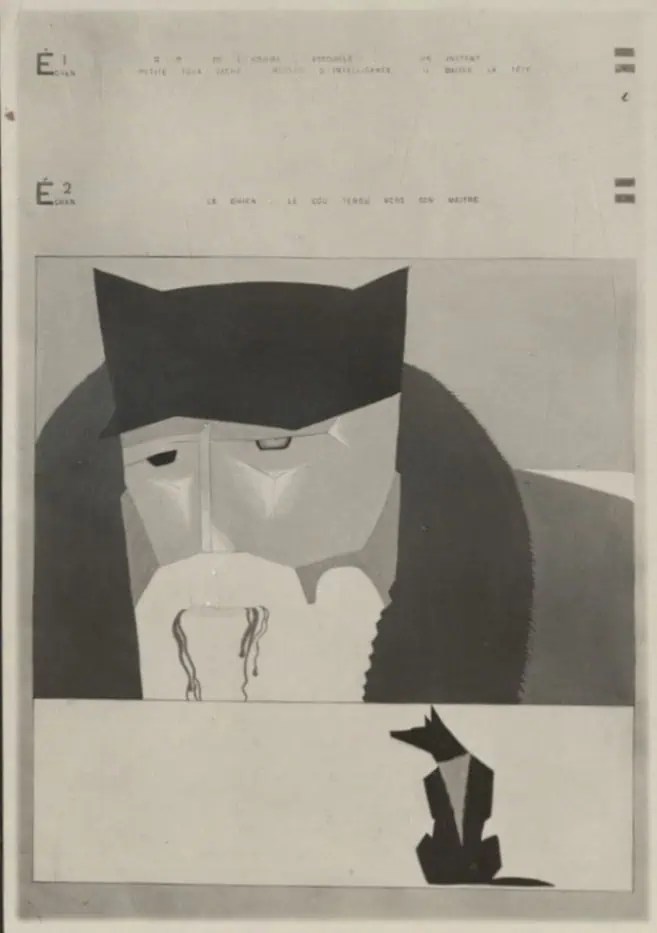
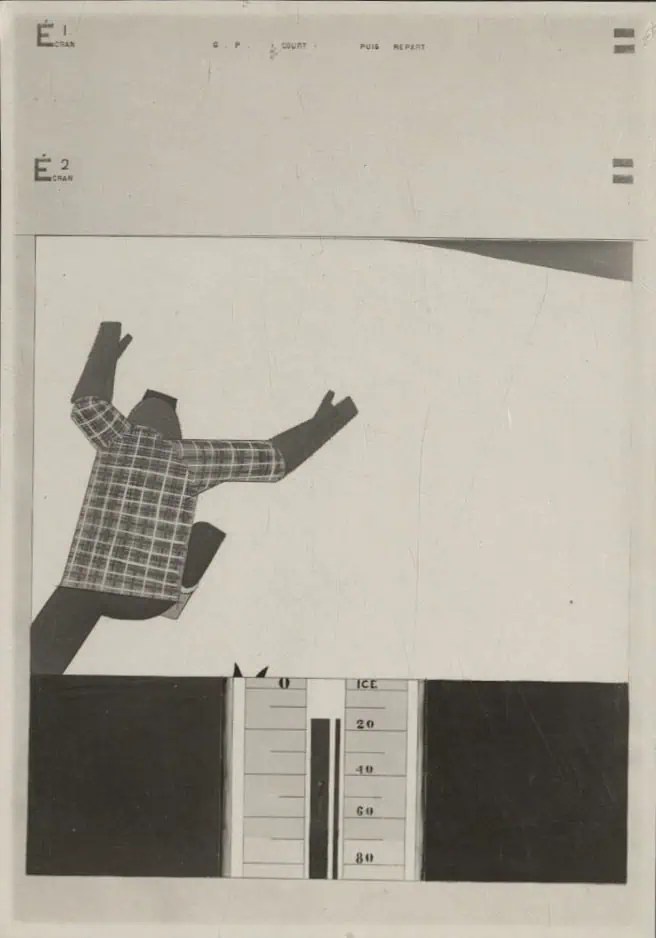
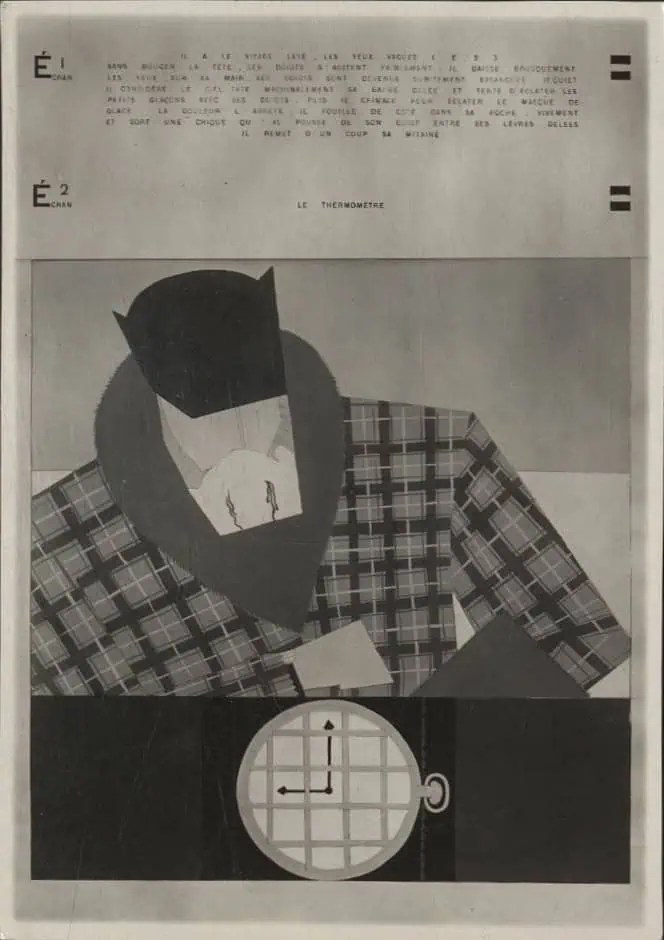
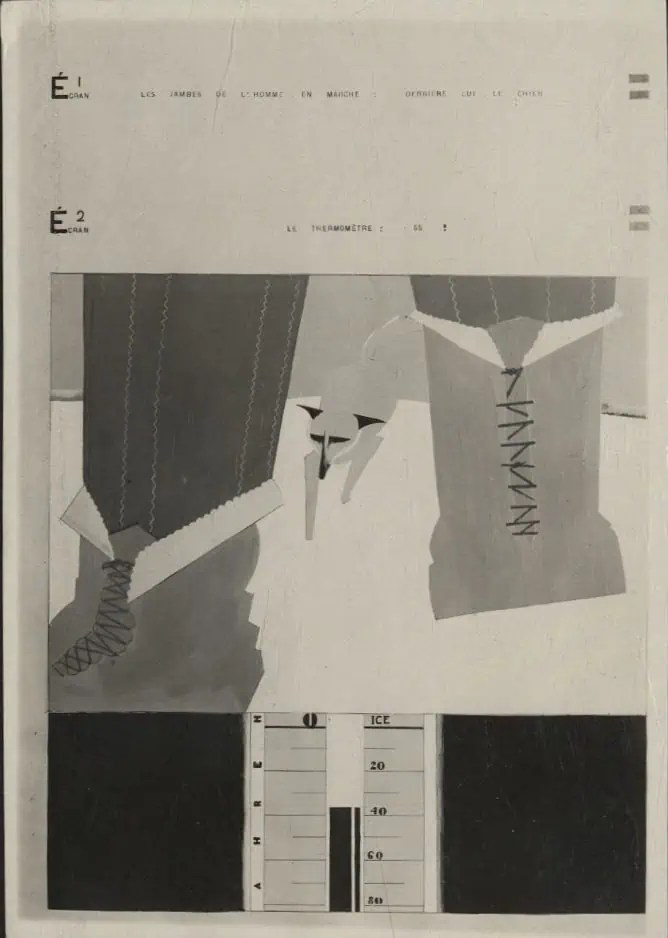


Storyboards from the lost 1928 film To Build a Fire
Is there a great lost film that you’re kind of obsessed with?
Too many to count!
I tried making a Top 10 several years ago and couldn’t whittle it down, so I just made a Top 20 instead.
One recently that has captured my imagination is a 1928 French adaptation of Jack London’s short story To Build a Fire.
It used a triptych widescreen method—similar to Abel Gance’s climactic battle sequence in Napoléon (1927)—but all that survives is a couple production stills.
I recently visited the Utah State University archives to view several items related to this lost film held in their Jack London Collection.
The on-set photographs of Jack London visiting the set and some drawing boards for shots of the film just made me want to see this innovative film even more.
Even if we can’t watch the film, I just love the detective work of finding out plenty of information about its production and reception through the surviving supplementary materials left behind.


